
Green hydrogen is slowly but surely becoming an attractive proposition in India as companies attempt to decrease their reliance on fossil fuels. Hydrogen is being considered by multiple industrial sectors, including the refining and fertiliser industries as well as the steel industry, as an alternative for some industrial applications. However, in order to produce green hydrogen, one would require not only renewables but also the necessary equipment, and here come electrolysers.
With hydrogen in India gradually growing into a bigger and more important market, the expertise of a reliable electrolyser company becomes more relevant than ever before.
What Is an Electrolyser and How Does It Work?
Hydrogen is obtained through the electrolysis of water using electricity. In cases when the electricity is obtained from renewable sources like solar energy or wind energy, the hydrogen obtained may be considered green hydrogen depending on the production standards.
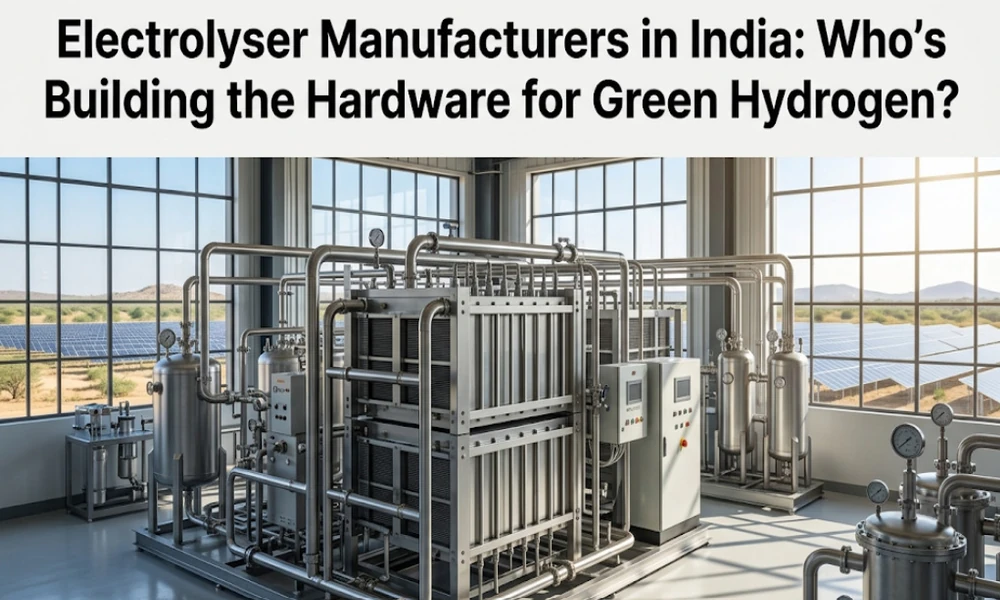
Though the process may seem easy, there are a number of requirements that have to be followed in order to obtain hydrogen industrially. These requirements include electrolyser equipment made up of the stack, where the reaction occurs, as well as additional equipment responsible for water, power, gas, cooling, and safety systems.
This choice of equipment depends on the quantity of hydrogen that is needed at a particular facility and the intended purpose of its use.
What Role Do Electrolyser Manufacturers Play in India?
The National Green Hydrogen Mission of India plans to transform the nation into one of the biggest producers and suppliers of green hydrogen and its derivatives. The National Green Hydrogen Mission of India includes the initiative of manufacturing electrolysers and producing hydrogen.
As per the Ministry of New and Renewable Energy, 15 manufacturers have been provided an electrolyser manufacturing capacity of 3,000 MW annually under the manufacturing incentive scheme. Local manufacturing is becoming increasingly necessary because it requires dependability of the machinery, technical know-how, and availability of replacement parts for any big hydrogen projects.
What Should You Look for in an Electrolyser Manufacturer?
Not every electrolyser is suitable for every project. Before choosing a supplier, businesses should consider a few practical factors.
1. Efficiency of technology
There are alkaline and proton exchange membrane, or PEM, electrolyser technologies. Alkaline electrolyser technology is popular for use in industry. PEM systems may be more flexible with changing operations. It depends on the needs of each particular project.
2. Production capacity
Manufacturers’ capacity shows the possibility of working with the projects while they are growing. But this criterion isn’t sufficient. Customers need to evaluate delivery time, product specifications, quality controls, and other factors, including technical support.
3. Safety and reliability
Handling hydrogen safely requires special attention due to its flammability. Technical equipment, purity of gas, pressure control, monitoring systems, and other safety standards should be considered before starting the project.
4. Additional services besides equipment
An industrial hydrogen project includes several systems. So cooperation with the supplier who provides system integration, installation, commissioning, and maintenance services can facilitate the process.
Waaree’s Role in India’s Green Hydrogen Sector
Waaree is expanding beyond solar manufacturing into green hydrogen equipment and project solutions. Its offering includes alkaline electrolyser manufacturing, customised stacks, balance of plant systems, and turnkey engineering, procurement, and construction services.
According to Waaree’s official green hydrogen page, its electrolysers are designed for capacities ranging from 125 kW to 10 MW per stack, with hydrogen purity of up to 99.999%. The company also identifies support for turnkey projects of up to 100 MW.
Waaree’s Valsad facility in Gujarat is listed with annual electrolyser production capacity of up to 300 MW. Separately, the company’s website highlights a broader annual electrolyser production capacity of 1 GW. These manufacturing and project capabilities position Waaree among the companies developing equipment and solutions for India’s growing hydrogen sector.
You can explore Waaree’s green hydrogen solutions to learn more about its electrolyser technology and project offerings.
Where Can Green Hydrogen Be Used?
Green hydrogen has applications in sectors that may find it hard to electrify, as well as those already using hydrogen as an input material.
These sectors include refineries and fertilizer production, and the steel industry is experimenting with hydrogen-based production processes for the reduction of emissions. Green hydrogen can be used for derivative purposes, producing green ammonia with applications in fertilizers and as a medium for energy storage and transportation.
But this depends on issues of production costs, availability of renewable power, water resources, infrastructure, and demand from customers. Electrolysis plant fabrication is just one of the elements in the value chain necessary to make these projects viable.
Conclusion
India’s green hydrogen ambitions will depend not only on producing more renewable electricity but also on building reliable equipment and the infrastructure needed to use hydrogen at scale. Choosing the right electrolyser manufacturer requires looking beyond capacity to technology, safety, service, and long-term project requirements. With its growing presence in alkaline electrolyser manufacturing and integrated hydrogen solutions, Waaree is developing capabilities to support industrial customers exploring this transition. As the sector matures, dependable equipment and well-planned projects will be essential to turning green hydrogen from an emerging opportunity into a practical industrial energy solution.