
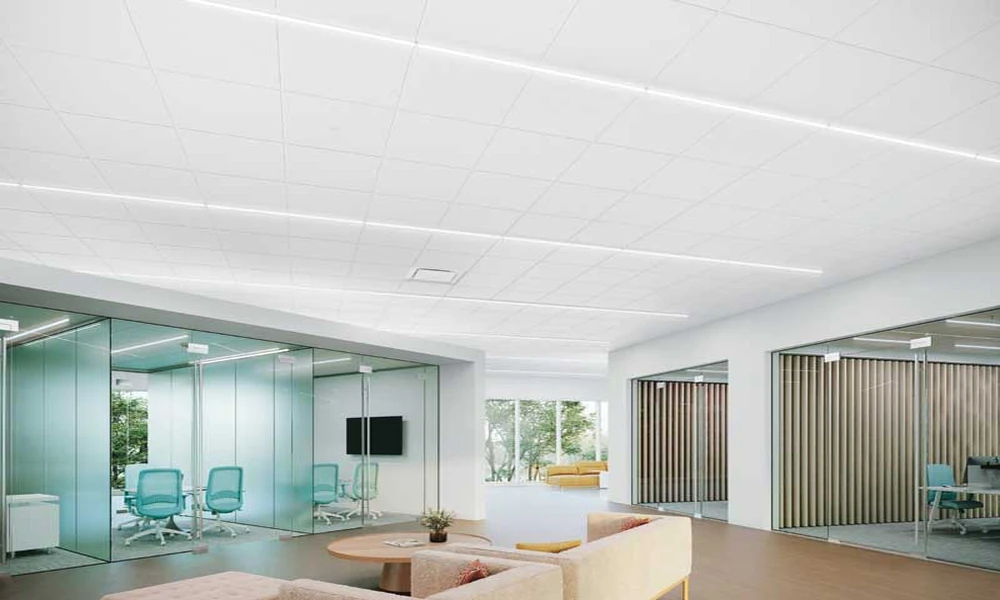
Acoustic ceiling panels are one of the most effective ways to control noise in indoor environments. You will find them in offices, classrooms, studios, and commercial spaces where sound clarity matters. While they may look simple from the outside, their performance depends heavily on two key factors: core density and panel thickness.
These two properties directly influence how well a panel absorbs sound, which frequencies it targets, and how it performs in real-world spaces. Understanding how they work makes it much easier to choose the right solution instead of relying on guesswork.
Let’s break it down in a clear, practical way.
What Sound Absorption Really Means
Before diving into density and thickness, it helps to understand what sound absorption actually involves.
When sound waves hit a surface, three things can happen:
- Some sound is reflected back into the room
- Some passes through the material
- Some is absorbed and converted into small amounts of heat
Acoustic panels are designed to maximise that third outcome. Instead of letting sound bounce around, they trap and dissipate it within their structure. The effectiveness of this process largely depends on how the panel’s internal core is built.
What Is Core Density in Acoustic Panels?
Core density refers to how tightly packed the material inside the panel is. Most acoustic ceiling panels use materials like mineral wool, fibreglass, or foam, all of which can be manufactured at different densities.
In simple terms:
- Low-density panels are lighter and more porous
- High-density panels are heavier and more compact
This difference changes how sound waves interact with the material.
How Core Density Affects Sound Absorption
Core density determines how easily sound waves can enter the panel and how much resistance they encounter once inside.
Lower Density: Better for Mid to High Frequencies
Low-density panels allow sound waves to pass into the material more easily. Once inside, the porous structure helps dissipate energy effectively.
This makes them particularly good at absorbing:
- Speech frequencies
- Office noise
- General ambient sound
They are commonly used in open-plan offices and classrooms where clarity is more important than blocking deep, low-frequency noise.
Higher Density: Better for Controlling Sound Energy
High-density panels provide more resistance. They do not let sound pass through as easily, but they can absorb stronger sound energy once it enters.
They are more effective for:
- Lower frequency sounds (to some extent)
- Areas with higher noise intensity
- Spaces requiring more controlled acoustics
That said, extremely dense panels can sometimes reflect more sound if not paired with the right thickness. This is why density alone is not the full story.
Why Thickness Matters Just as Much
If density controls resistance, thickness controls how much space sound has to dissipate.
Thicker panels give sound waves more room to travel inside the material. This is especially important for low-frequency sounds, which have longer wavelengths and need more depth to be absorbed effectively.
How Thickness Affects Performance
1. Thin Panels: Surface-Level Absorption
Thin acoustic panels are typically used for:
- Reducing echo
- Controlling high-frequency reflections
- Improving speech clarity
They work well in spaces where the main issue is reverberation rather than heavy noise.
However, they struggle with lower frequencies because sound waves simply pass through too quickly without losing much energy.
2. Thicker Panels: Broader Frequency Control
Thicker panels can absorb a wider range of frequencies, including lower ones. The added depth allows sound waves to travel further into the material, increasing the chances of energy loss.
This makes them more suitable for:
- Meeting rooms
- Auditoriums
- Recording environments
- Busy commercial spaces
In open-plan environments, thicker ceiling panels help reduce the overall “hum” of background noise rather than just surface reflections.
The Relationship Between Density and Thickness
Density and thickness do not work independently. They interact with each other to determine overall performance.
A useful way to think about it:
- Low density + thick panel = strong absorption across a wide range, especially mid frequencies
- High density + thin panel = limited absorption, more reflection risk
- High density + thick panel = controlled, balanced absorption including some lower frequencies
The most effective acoustic ceiling panels are designed with this balance in mind rather than maximising one property alone.
Why Air Gaps Make a Difference
One often overlooked factor is the air gap between the panel and the ceiling.
When panels are suspended (rather than fixed directly), the gap behind them effectively increases their working thickness. This improves low-frequency absorption without needing a physically thicker panel.
In many Singapore commercial projects, ceiling baffles or clouds are used specifically for this reason. They provide better performance while maintaining a clean, modern look.
Practical Applications in Real Spaces
Different environments require different combinations of density and thickness.
Offices and Open-Plan Workspaces
These typically benefit from medium-density and moderate-thickness panels. The goal is to control speech noise and reduce distractions without over-deadening the space.
Meeting Rooms
Thicker panels with balanced density help improve speech clarity and reduce echo during discussions or presentations.
Commercial and Public Spaces
Higher ceilings and larger volumes often require thicker panels or suspended systems to manage overall noise levels effectively.
Specialist Environments
Studios or performance spaces may use a mix of densities and thicknesses to target specific frequency ranges.
Choosing the Right Combination
When selecting acoustic ceiling panels, it helps to consider:
- The type of noise (speech, machinery, ambient)
- The size and height of the space
- The level of absorption needed
- Whether panels will be fixed or suspended
Rather than focusing on a single specification, the goal is to match density and thickness to the actual acoustic problem.
Final Thoughts
Core density and thickness are the two main factors that define how an acoustic ceiling panel performs. One controls how sound enters and interacts with the material, while the other determines how much energy can be absorbed.
When used together correctly, they create a balanced system that improves clarity, reduces noise, and enhances overall comfort in a space.
In real-world applications, especially in dense urban environments like Singapore, getting this balance right can make a noticeable difference. It turns a noisy, distracting space into one that feels controlled, functional, and far more comfortable to use.